

If you're looking for an AI Overviews tracker, the tools in this category aren’t all measuring the same thing. Most tools that come up for this search are traditional SEO platforms (Ahrefs, Semrush, SE Ranking) that have added AI Overviews detection as a feature. They're built to answer an SEO question: which of your tracked keywords now trigger an AI Overview, and is your domain being cited as a source? That's useful data if you're trying to understand how AIO is affecting your organic traffic.
The second type of tool approaches Google AI Overviews differently. Rather than monitoring it as a SERP feature alongside your keyword rankings, it tracks your brand visibility within AIO responses to buying-intent prompts (alongside its performance in other LLMs such as ChatGPT, Perplexity, Gemini, and Claude). The question it answers is different: when someone asks Google AI Overviews which product or service to use in your category, how often is your brand recommended?
This article is focused on the second use case. If you're monitoring AIO as part of an SEO workflow and want keyword-level citation detection, Ahrefs and SE Ranking are both worth looking at. If you want to understand how your brand is being recommended in AI-generated answers, read on.
What tracking Google AI Overviews actually means
Google AI Overviews generates a synthesized answer at the top of search results for a subset of queries. It cites sources by including links, and, if the user is asking for product or solution recommendations (directly or indirectly) it names brands in the body of the response.
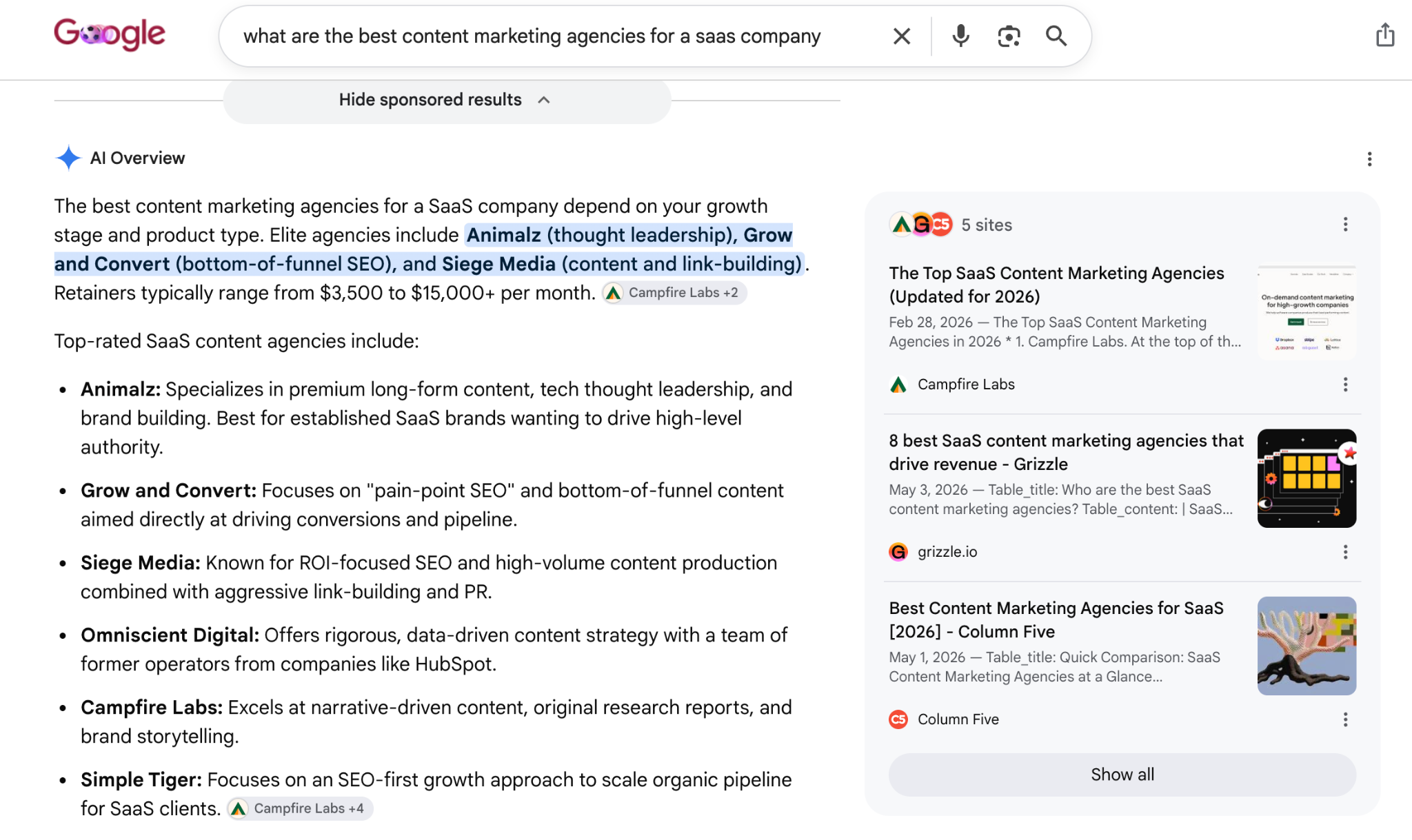
A link citation means your page was used as a source. A brand mention means Google's AI named your brand in its answer. You can be cited without being mentioned, and mentioned without being cited.
For SEO tools, tracking AIO means detecting when it appears for a keyword and recording which domains are cited. For brand visibility tools, it means running buying-intent prompts and recording which brands are mentioned by name in the response. Both are legitimate measurements, but they tell you different things. A brand that gets cited frequently as a source may or may not be getting recommended to users. The citation data matters for understanding your SEO footprint, and the brand mention data is what connects to leads.
What to look for in a brand visibility tracker for AIO
Topic-based tracking, not single-prompt detection
AIO responses aren’t fixed. The same query can produce different results depending on phrasing, and Google's query fan-out means AIO assembles answers from multiple sub-queries behind the scenes; so how you phrase a search affects which sources and brands appear. Tracking multiple query variations within the same topic gives you a more accurate picture of your visibility than any single query can.
Tracking multiple prompt variations within the same topic, approaching the same buying-intent question from different angles, and averaging the result gives you a more stable picture. A topic might be “best project management software for remote teams.” The prompts within it approach that from several angles: tool comparisons, specific use cases, team sizes. Your visibility percentage across those prompts is more meaningful than your result on any one of them.
Brand mentions separated from citations
AIO assembles answers from multiple source URLs and displays them as numbered links alongside the generated text. Your domain appearing in those links is a citation. Your brand being named in the response text is a mention. A tool that reports both as "visibility" will give you a number that combines two different signals. For AIO in particular, because it's citation-heavy by design, combined figures can be substantially higher than brand-mentions-only figures. A tool with a toggle that separates them lets you see both clearly.
Per-LLM breakdowns
Google AI Overviews and AI Mode are consistently the highest-performing LLMs for brand visibility across the clients we track at Grow and Convert. In our data across 19 clients, one or the other was the top-performing LLM for all but one client.
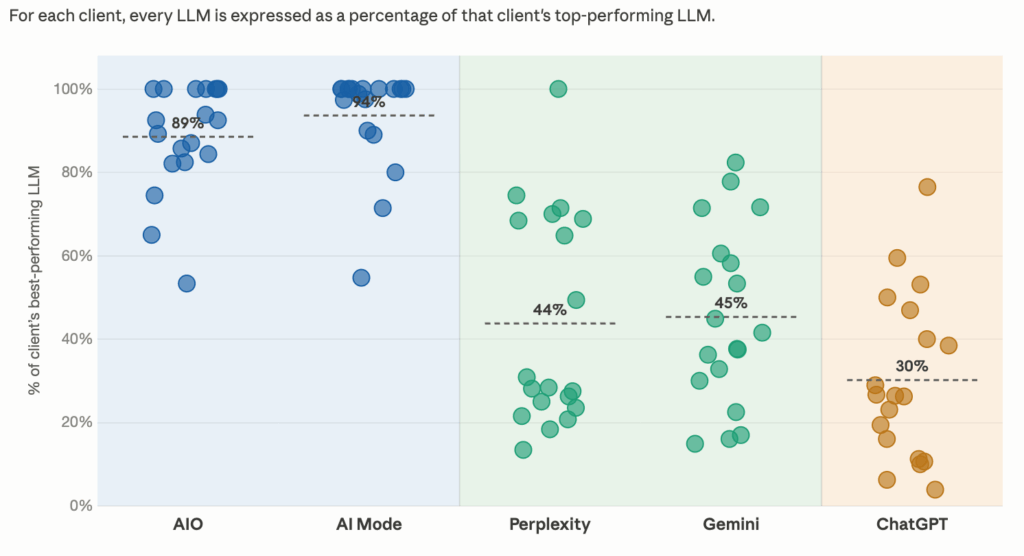
That makes AIO an important tracking target, but the comparison to other LLMs is what gives the number context.
A brand with 80% AIO visibility and 20% ChatGPT visibility has a different strategic situation than a brand with 45% across both. The gap tells you whether your visibility is driven by search presence, which AIO rewards, or by training-data familiarity, which ChatGPT draws on. Tracking AIO in isolation loses that signal.
AI Overviews tracking tools
Traqer
Traqer is our tool, built to track AI visibility across five major LLMs. Traqer tracks Google AI Overviews alongside ChatGPT, Perplexity, Gemini, and Claude. Tracking is organized around topics rather than individual prompts. Each topic contains multiple prompt variations approaching the same buying-intent question from different angles, and visibility is reported as the percentage of those prompts where your brand appears, shown separately per LLM.
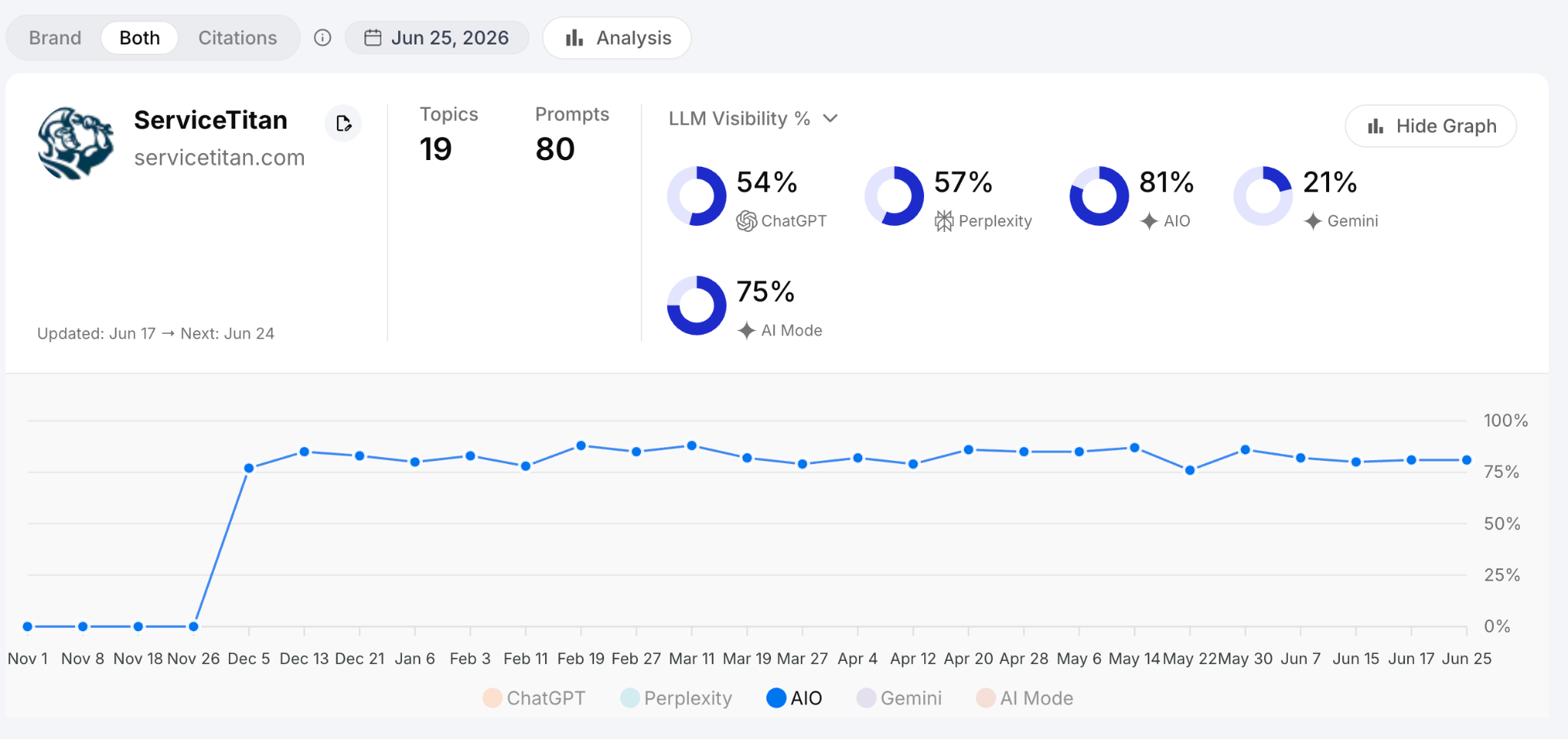
AIO and AI Mode are the strongest-performing LLMs in our client data. We published the full breakdown in our article on how the three tiers of AI search visibility differ across LLMs.
Because AIO is tied to Google's search index, it's also the LLM most directly connected to your existing SEO work (read full explanation): content that ranks in organic search tends to surface in AIO responses, which makes AIO visibility a useful indicator of whether your content strategy is reaching AI search.
Traqer separates brand mentions from citations at the topic and prompt level. The toggle at the top of every brand page switches between brand mentions only, citations only, or both combined. For AIO, which is citation-heavy by design, this toggle matters: combined visibility numbers can be significantly higher than brand-mentions-only numbers, and the difference tells you whether you're being cited as a source or recommended to users.
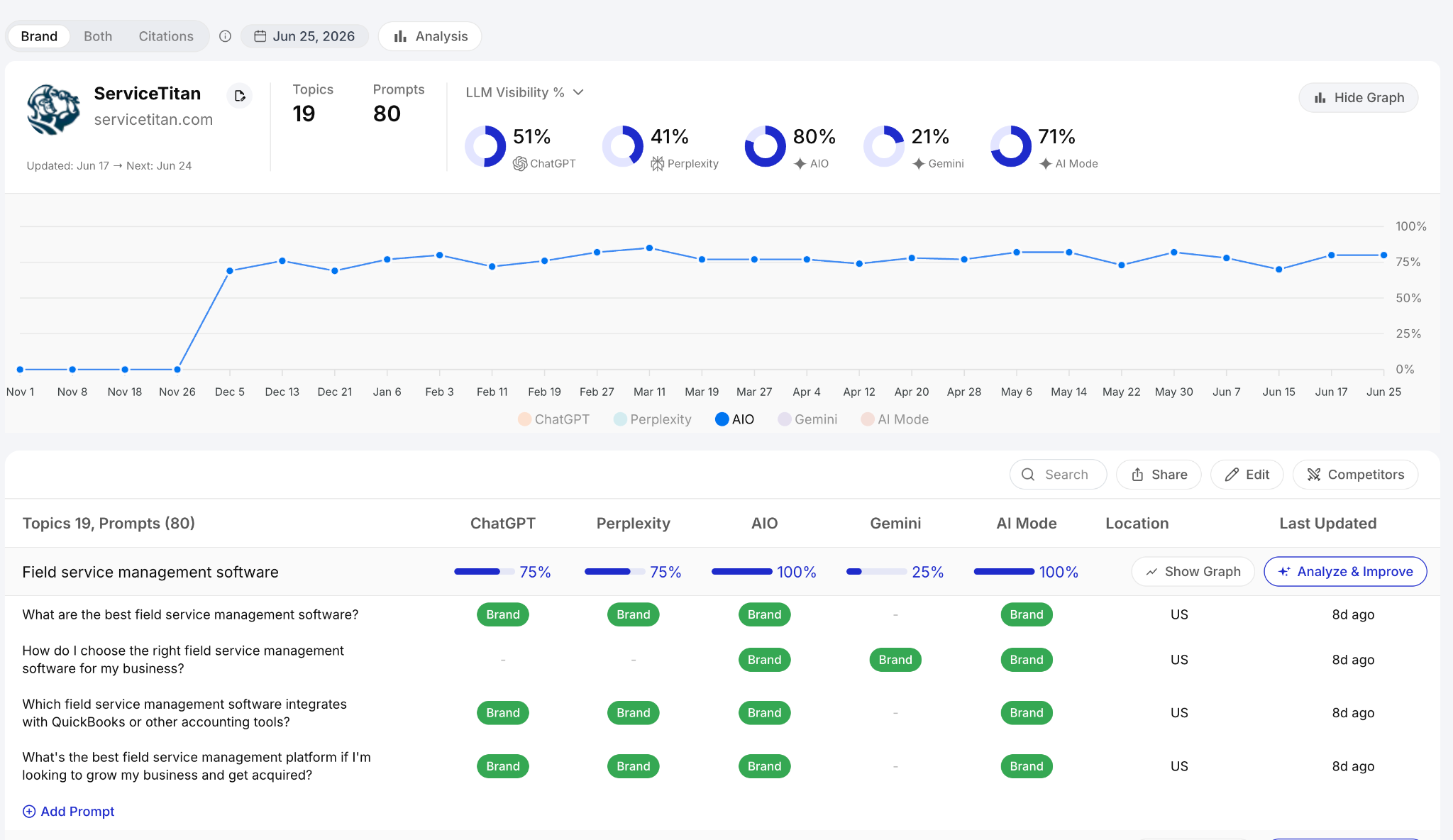
Three visibility metrics sit at the brand level. LLM Visibility % is the share of tracked prompts where your brand appears, per LLM. LLM Visibility Count is the raw number of prompts, which only increases when visibility genuinely improves. Topic Visibility shows how many tracked topics have high, medium, or low visibility across selected LLMs. The latter two can't be gamed by adjusting which prompts to track.
Traqer also has an Analyze and Improve view for each topic, showing which brands appear most often in AIO responses, which domains and specific URLs get cited, and a Brand Mention Probability rating per prompt. AIO is more likely than most LLMs to return informational overviews that don't name any brands.
The probability rating identifies which prompts are worth tracking and which are informational queries where brand recommendations don't occur regardless of category.
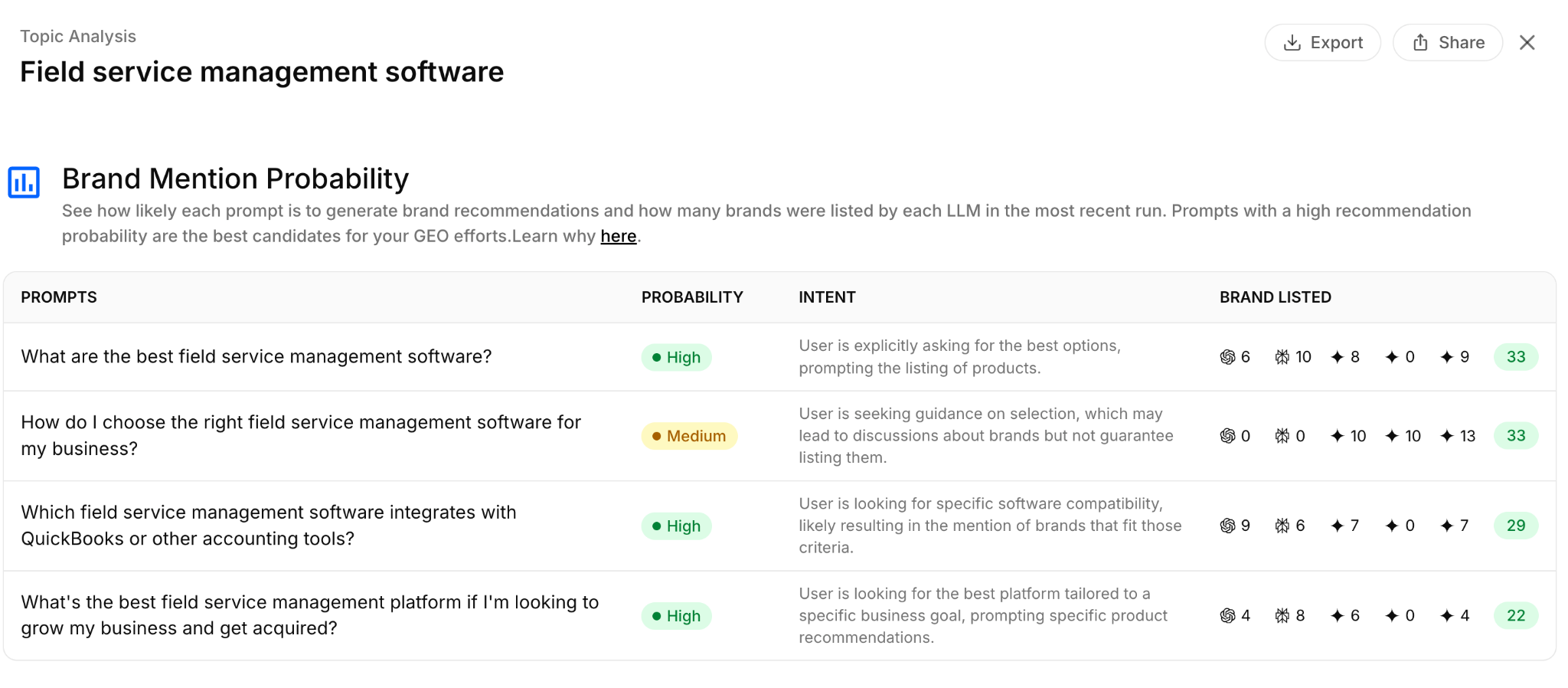
Pricing starts at $25/month for 10 topics and 50 prompts. Unlimited brands and unlimited users at every plan level. All five LLMs included, no per-LLM charge.
Profound
Profound covers Google AI Overviews as part of its broader AI visibility platform. It's built for enterprise teams and includes polished reporting, competitive benchmarking, and daily tracking across LLMs. Pricing starts at $99/month for a Starter plan covering ChatGPT only, with the Growth plan at $399/month adding Perplexity and Google AI Overviews, and the Lite plan at $499/month covering more platforms. Enterprise is custom-quoted.
Peec
Peec covers Google AI Overviews alongside other LLMs. The interface is polished and the tool uses UI scraping rather than API responses. Base plans cover three LLMs, with additional models available as paid add-ons. Suited to teams that want multi-market AIO brand visibility tracking at a mid-market price point.
Otterly
Otterly includes Google AI Overviews as one of its tracked platforms alongside ChatGPT, Perplexity, and Microsoft Copilot. Gemini and Google AI Mode are available as paid add-ons. It starts at $29/month and has added GEO audits and content recommendations alongside tracking. One of the more accessible entry points for multi-LLM brand visibility tracking.
How AIO visibility connects to your content and SEO work
Google AI Overviews is the LLM most directly influenced by your existing SEO performance. Because it draws from Google's search index, content that ranks in organic search tends to surface in AIO responses for related queries. Traqer's AIO data shows whether that's actually happening for your brand, topic by topic.
The Analyze and Improve view shows which domains and specific pages AIO is citing for each topic. If competitors are appearing as AIO sources for your core topics and your pages aren't, that points to content gaps or authority gaps worth addressing. The pages AIO cites tend to have strong backlink profiles and be well-structured for the queries they serve.
Third-party coverage often moves the needle faster than owned content for topics where your SEO footprint is thin. AIO draws from review sites, comparison articles, and industry publications alongside your own domain. A mention on a site AIO regularly cites for your category can improve your brand recommendation rate more directly than producing additional owned content. The Analyze and Improve view shows exactly which third-party pages AIO is citing for each topic, which gives you a specific outreach target list rather than a general hypothesis.
For a broader look at how AI visibility tracking tools compare across LLMs, see our article on AI visibility tracking tools for agencies.